Seeing Rome in one day might sound ambitious, but with a well-planned itinerary you can cover the city's most iconic sights: the Colosseum, the Roman Forum and the Vatican, with a few memorable stops along the way.
The trick is to split the day in two: mornings for Ancient Rome, afternoons for Vatican City. This keeps travel time to a minimum and leaves you with a real sense of the city by the time evening comes.
Rome in one day: where to start
The best starting point for a one-day Rome itinerary is the Colosseum. Arriving early means you can explore at a gentler pace: in winter the amphitheatre opens at 8:30am, while the Roman Forum and Palatine Hill open at 9:00am.
The standard ticket for the archaeological park covers the Colosseum, Roman Forum and Palatine Hill and is valid for 24 hours. Tickets are issued in your name, must be shown with ID at the entrance and require you to choose a time slot for the Colosseum.
Sales open 30 days before your visit, so if you only have one day in the city, it pays to book ahead, especially in peak season.
What to see at the Colosseum
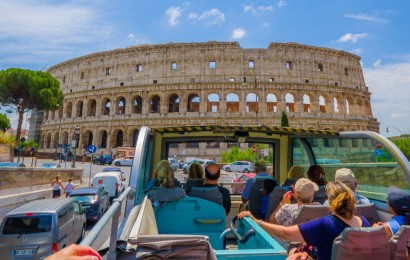
The Colosseum, originally known as the Flavian Amphitheatre, was commissioned by Vespasian and completed by his son Titus. It was inaugurated in 80 AD with a hundred days of games and remains the largest Roman amphitheatre in the world.
Inside, the standard route takes you through the first and second tiers, where you can look down over the arena and the tiered seating. The many facts about the Colosseum help bring every detail to life, from the stands to the spectacles once staged here.
Special tickets also give access to the arena floor, the attic and the Colosseum underground, where gladiators and animals were readied before the shows.
Right next to the amphitheatre stands the Arch of Constantine, the natural gateway to the Forum area.
Roman Forum and Palatine Hill: what to see
The Roman Forum was the political, religious and commercial heart of ancient Rome. It was once a marshy valley between the Capitoline and Palatine hills, drained by the construction of the Cloaca Maxima.
Walking among the ruins, you'll pass the Arch of Titus, celebrating victory in the Jewish War, the Curia Julia, where the Senate met, the Temple of Vesta with the House of the Vestals, and the Arch of Septimius Severus.
The same ticket lets you climb the Palatine Hill, which overlooks both the Forum and the Circus Maximus. From up here you get one of the finest views over the archaeological area.
The Imperial Fora and Piazza Venezia
Leaving the Roman Forum, your walk continues along Via dei Fori Imperiali, the avenue that runs past the monumental squares built by Rome's emperors. The history of the Imperial Fora traces the city's growth from Julius Caesar to Trajan.
At the end of the avenue lies Piazza Venezia, dominated by the Vittoriano. Just around the corner is the Capitoline Hill, with its square designed by Michelangelo and home to the Capitoline Museums.
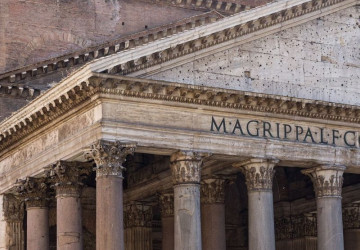
This area is a good place to stop for lunch before heading to the Vatican. If you still have energy, you can extend your walk to the Pantheon and Piazza Navona, two highlights of Classical Rome.
Rome in one day: an afternoon at the Vatican
The afternoon of your Rome in one day itinerary belongs to Vatican City, the smallest state in the world and home to some of the greatest masterpieces of Western art.
There are three main sights: the Vatican Museums, the Sistine Chapel and St Peter's Basilica. To see them all in one afternoon, it's best to book your museum entry in advance and skip the queues.
Vatican Museums and Sistine Chapel
The Vatican Museums grew out of the private collection of Pope Julius II, who displayed it in the Courtyard of the Statues, now the Octagonal Court. Among the most celebrated rooms are the Raphael Rooms, along with the most famous paintings in the Vatican Museums.
The route ends in the Sistine Chapel, where Michelangelo painted the ceiling for Julius II and, years later, the Last Judgement. Yet there is more to the chapel than its most famous fresco: the side walls feature works by Botticelli, Perugino and Ghirlandaio, among the Sistine Chapel highlights beyond the Last Judgement.
St Peter's Basilica and St Peter's Square
St Peter's Basilica is 218 metres long and its dome rises to 132 metres. Bramante, Michelangelo, Maderno and Bernini all worked on its construction.
Inside is Michelangelo's Pietà, carved when the artist was barely in his twenties. It is one of the most moving works in the entire basilica.
In front of it opens St Peter's Square, designed by Gian Lorenzo Bernini between 1655 and 1667. Its colonnade counts 284 columns and 88 pillars, topped by 140 statues of saints.
Castel Sant'Angelo at sunset
To round off your Rome in one day itinerary, stroll down Via della Conciliazione to Castel Sant'Angelo, the mausoleum of Emperor Hadrian that over the centuries became a fortress and a papal residence.
At sunset, the bridge and the castle offer one of the loveliest views over the Tiber, with the dome of St Peter's in the background. The curiosities about Castel Sant'Angelo reveal its long history, from mausoleum to prison.
Rome in one day with the Green Line Tours hop-on hop-off bus
Seeing Rome in one day means moving between sights that are far apart, from the Colosseum to the Vatican, without wasting precious time. The Green Line Tours hop-on hop-off bus connects the key stops on this itinerary, and you can get on and off as many times as you like.
The most useful stops for this route are four. Stop 3 Colosseum, on Via di San Gregorio, takes you straight to the Colosseum, the Roman Forum, the Palatine Hill and the Arch of Constantine. Stop 4 Circus Maximus is handy for the Palatine side, the Mouth of Truth and the Baths of Caracalla.
Stop 5 Piazza Venezia, on Via del Teatro Marcello, serves the Vittoriano, the Capitoline Hill and the Capitoline Museums, and is also a convenient starting point for the Jewish Ghetto and Campo de' Fiori. Stop 6 Vatican, on Lungotevere Tor di Nona, is close to St Peter's Basilica, the Vatican Museums, Castel Sant'Angelo, Piazza Navona and the Pantheon.
The one-day ticket is valid from morning to evening on the same day, and 24, 48 and 72-hour tickets are also available. On board you'll find an audio guide in 16 languages, free Wi-Fi and a city map.
Buy your Rome hop-on hop-off bus ticket online and make the most of your day between the Colosseum, the Forum and the Vatican.
Rome in One Day: An Itinerary Through the Colosseum, Forum and Vatican
Seeing Rome in one day might sound ambitious, but with a well-planned itinerary you can cover the city's most iconic sights: the Colosseum, the Roman Forum and the Vatican, with a few memorable stops along the way.
The trick is to split the day in two: mornings for Ancient Rome, afternoons for Vatican City. This keeps travel time to a minimum and leaves you with a real sense of the city by the time evening comes.
Rome in one day: where to start
The best starting point for a one-day Rome itinerary is the Colosseum. Arriving early means you can explore at a gentler pace: in winter the amphitheatre opens at 8:30am, while the Roman Forum and Palatine Hill open at 9:00am.
The standard ticket for the archaeological park covers the Colosseum, Roman Forum and Palatine Hill and is valid for 24 hours. Tickets are issued in your name, must be shown with ID at the entrance and require you to choose a time slot for the Colosseum.
Sales open 30 days before your visit, so if you only have one day in the city, it pays to book ahead, especially in peak season.
What to see at the Colosseum
The Colosseum, originally known as the Flavian Amphitheatre, was commissioned by Vespasian and completed by his son Titus. It was inaugurated in 80 AD with a hundred days of games and remains the largest Roman amphitheatre in the world.
Inside, the standard route takes you through the first and second tiers, where you can look down over the arena and the tiered seating. The many facts about the Colosseum help bring every detail to life, from the stands to the spectacles once staged here.
Special tickets also give access to the arena floor, the attic and the Colosseum underground, where gladiators and animals were readied before the shows.
Right next to the amphitheatre stands the Arch of Constantine, the natural gateway to the Forum area.
Roman Forum and Palatine Hill: what to see
The Roman Forum was the political, religious and commercial heart of ancient Rome. It was once a marshy valley between the Capitoline and Palatine hills, drained by the construction of the Cloaca Maxima.
Walking among the ruins, you'll pass the Arch of Titus, celebrating victory in the Jewish War, the Curia Julia, where the Senate met, the Temple of Vesta with the House of the Vestals, and the Arch of Septimius Severus.
The same ticket lets you climb the Palatine Hill, which overlooks both the Forum and the Circus Maximus. From up here you get one of the finest views over the archaeological area.
The Imperial Fora and Piazza Venezia
Leaving the Roman Forum, your walk continues along Via dei Fori Imperiali, the avenue that runs past the monumental squares built by Rome's emperors. The history of the Imperial Fora traces the city's growth from Julius Caesar to Trajan.
At the end of the avenue lies Piazza Venezia, dominated by the Vittoriano. Just around the corner is the Capitoline Hill, with its square designed by Michelangelo and home to the Capitoline Museums.
This area is a good place to stop for lunch before heading to the Vatican. If you still have energy, you can extend your walk to the Pantheon and Piazza Navona, two highlights of Classical Rome.
Rome in one day: an afternoon at the Vatican
The afternoon of your Rome in one day itinerary belongs to Vatican City, the smallest state in the world and home to some of the greatest masterpieces of Western art.
There are three main sights: the Vatican Museums, the Sistine Chapel and St Peter's Basilica. To see them all in one afternoon, it's best to book your museum entry in advance and skip the queues.
Vatican Museums and Sistine Chapel
The Vatican Museums grew out of the private collection of Pope Julius II, who displayed it in the Courtyard of the Statues, now the Octagonal Court. Among the most celebrated rooms are the Raphael Rooms, along with the most famous paintings in the Vatican Museums.
The route ends in the Sistine Chapel, where Michelangelo painted the ceiling for Julius II and, years later, the Last Judgement. Yet there is more to the chapel than its most famous fresco: the side walls feature works by Botticelli, Perugino and Ghirlandaio, among the Sistine Chapel highlights beyond the Last Judgement.
St Peter's Basilica and St Peter's Square
St Peter's Basilica is 218 metres long and its dome rises to 132 metres. Bramante, Michelangelo, Maderno and Bernini all worked on its construction.
Inside is Michelangelo's Pietà, carved when the artist was barely in his twenties. It is one of the most moving works in the entire basilica.
In front of it opens St Peter's Square, designed by Gian Lorenzo Bernini between 1655 and 1667. Its colonnade counts 284 columns and 88 pillars, topped by 140 statues of saints.
Castel Sant'Angelo at sunset
To round off your Rome in one day itinerary, stroll down Via della Conciliazione to Castel Sant'Angelo, the mausoleum of Emperor Hadrian that over the centuries became a fortress and a papal residence.
At sunset, the bridge and the castle offer one of the loveliest views over the Tiber, with the dome of St Peter's in the background. The curiosities about Castel Sant'Angelo reveal its long history, from mausoleum to prison.
Rome in one day with the Green Line Tours hop-on hop-off bus
Seeing Rome in one day means moving between sights that are far apart, from the Colosseum to the Vatican, without wasting precious time. The Green Line Tours hop-on hop-off bus connects the key stops on this itinerary, and you can get on and off as many times as you like.
The most useful stops for this route are four. Stop 3 Colosseum, on Via di San Gregorio, takes you straight to the Colosseum, the Roman Forum, the Palatine Hill and the Arch of Constantine. Stop 4 Circus Maximus is handy for the Palatine side, the Mouth of Truth and the Baths of Caracalla.
Stop 5 Piazza Venezia, on Via del Teatro Marcello, serves the Vittoriano, the Capitoline Hill and the Capitoline Museums, and is also a convenient starting point for the Jewish Ghetto and Campo de' Fiori. Stop 6 Vatican, on Lungotevere Tor di Nona, is close to St Peter's Basilica, the Vatican Museums, Castel Sant'Angelo, Piazza Navona and the Pantheon.
The one-day ticket is valid from morning to evening on the same day, and 24, 48 and 72-hour tickets are also available. On board you'll find an audio guide in 16 languages, free Wi-Fi and a city map.
Buy your Rome hop-on hop-off bus ticket online and make the most of your day between the Colosseum, the Forum and the Vatican.