Entering the Sistine Chapel means suddenly finding yourself immersed in one of the densest and most complex artistic spaces ever created. Your gaze is almost instinctively drawn to the Last Judgment, the monumental fresco dominating the altar wall. It’s a natural reaction: the scene is powerful, dramatic, charged with emotional tension. Yet stopping there would be limiting. The Sistine Chapel tells a far broader, layered visual story—one designed to be read slowly, from bottom to top, from right to left, and even diagonally.
This article was created precisely to guide both eye and mind beyond the most famous work, helping you grasp details, meanings, and artistic choices that often escape a hurried visit.
The Sistine Chapel Before Michelangelo
Before becoming synonymous with the genius of Michelangelo Buonarroti, the Sistine Chapel was already a place of central symbolic importance in the life of the Church. Built in the late fifteenth century at the behest of Pope Sixtus IV, from whom it takes its name, it served a precise purpose: to be the ceremonial heart of papal power. To this day, it hosts conclaves—the elections of popes—as well as the most solemn celebrations.
The chapel’s proportions are no coincidence. Its dimensions echo those of the Temple of Solomon described in the Old Testament, a clear signal of the link between the Old and New Covenants. This theological dialogue is the interpretive key to the entire painted cycle that covers its walls.
The Sistine Chapel’s Side Walls: A Story Often Overlooked
Many visitors immediately lift their eyes toward the ceiling, overlooking the side walls. Yet it is here that a fundamental narrative unfolds, entrusted to some of the greatest painters of the Florentine and Umbrian Renaissance.
Along the north wall run the Stories of Christ, while the south wall is devoted to the Stories of Moses. The message is clear: Moses represents the ancient Law, Christ its fulfillment. The two figures advance in parallel, creating a visual dialogue that accompanies the observer along the length of the chapel.
Among the artists involved are names such as Sandro Botticelli, Pietro Perugino, and Domenico Ghirlandaio. Their scenes are orderly, legible, constructed according to rational perspective—sharply contrasting with the sculptural force Michelangelo would introduce a few decades later.
The Ceiling: Much More Than the Creation of Adam
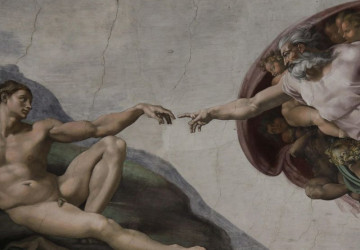
When the Sistine Chapel ceiling is mentioned, thoughts immediately turn to the Creation of Adam, with the nearly touching fingers. But that iconic image is just one of the nine central panels devoted to the Book of Genesis.
The cycle begins with the Separation of Light from Darkness and concludes with the Drunkenness of Noah, tracing a path from perfect creation to human fragility. It is telling that Michelangelo ends the story not with triumph, but with a scene of weakness—a profoundly human, almost disenchanted message.
Surrounding the central panels unfolds a universe of figures that may seem secondary, yet are essential to the overall reading.
Prophets and Sibyls: The Tension of Expectation
Seated on monumental thrones, the Prophets of the Old Testament and the Sibyls of the pagan world embody the anticipation of redemption. They are figures charged with psychological tension, captured in moments of reflection, doubt, and fatigue. Their bodies are powerful, often twisted, far removed from the classical ideal of balance.
Michelangelo does not paint them as immobile statues, but as living beings, crossed by thoughts and inner conflicts. It is a restless humanity, keenly aware of the weight of the revelation it bears.
The Ignudi: Beauty, Mystery, and Provocation
Among the most enigmatic figures in the Sistine Chapel are undoubtedly the Ignudi, the nude youths framing the Genesis scenes. They have no explicit narrative role, and precisely for this reason they have fueled centuries of interpretation.
Do they represent ideal beauty? Humanity before sin? Or are they simply an extreme exercise in anatomy and movement? They are likely all of these at once. Michelangelo uses their bodies to explore every expressive possibility of the male nude, transforming it into a universal language.
The Last Judgment: A More Conscious View
Returning to the Last Judgment after understanding the rest of the chapel completely changes the experience. It is not an isolated work, but the dramatic conclusion of a long narrative about humanity.
Christ does not appear as the serene judge of medieval tradition, but as a powerful, almost fearsome figure at the center of a vortex of bodies. Saints, the damned, the saved—all seem swept along by an inevitable force. Famous is the figure of Saint Bartholomew holding his flayed skin, in whose face many recognize a self-portrait of Michelangelo himself—a detail that opens a window onto the artist’s personal torment in the final years of his life.
Details That Speak More Than the Main Scenes of the Sistine Chapel
One of the most common mistakes during a visit is focusing only on the “famous” scenes. In reality, it is often the minor details that reveal the true greatness of the work: a sideways glance, a contracted hand, a body twisting in space in a way that feels unnatural yet believable.
The Sistine Chapel is not meant to be mentally photographed, but to be read like a complex text, made up of references, symbols, and unresolved tensions.
How to Observe the Sistine Chapel Without Missing Anything
The Sistine Chapel is a place that requires time, context, and a guide capable of reading what often eludes a quick glance. That’s why booking a Vatican tour with Green Line Tours is a strategic choice: a guided visit helps you navigate the artworks, understand the connections between frescoes, architecture, and history, and experience the Sistine Chapel not as a simple stop, but as the culmination of a coherent journey.
An organized tour also allows you to optimize visiting time, avoiding unnecessary waits and enjoying clear, in-depth explanations throughout the Vatican Museums route. It is the ideal way to turn the visit into a complete cultural experience, capable of restoring the Sistine Chapel to its full complexity and extraordinary artistic and symbolic value.
How to Reach the Sistine Chapel from Rome
Getting to the Sistine Chapel is straightforward, but doing it the right way can truly make a difference in planning your day. The Vatican Museums are located in a very busy and well-connected area, yet traffic, distances, and waiting times can affect the overall experience—especially if you are visiting Rome for only a few days.
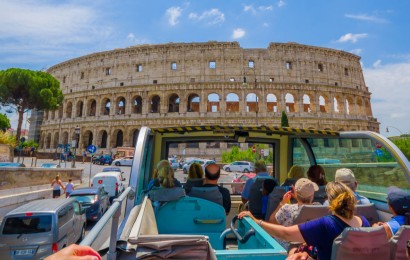
A practical and flexible solution is to purchase a Hop On Hop Off ticket with Green Line Tours. This service allows you to move comfortably between the city’s main attractions, getting off directly near the Vatican and optimizing travel without the stress of public transport or taxis. It’s the ideal option for those who want to integrate a visit to the Sistine Chapel into a broader itinerary, managing time and stops independently and arriving at the Vatican Museums in a simple, well-organized way.