Among the most interesting day trips from Rome, a visit to Ostia Antica undoubtedly holds a special place. This extraordinary archaeological site offers a true journey back in time, allowing visitors to discover what daily life was like in one of the most important cities of ancient Rome.
Often compared to Pompeii because of its remarkable state of preservation, Ostia Antica provides a different experience from the famous monuments found in Rome’s historic center. Here, visitors do not simply admire iconic landmarks; they walk through original Roman streets, ancient homes, baths, taverns, warehouses, and places of worship that tell the story of a city that flourished for centuries.
Planning a day at Ostia Antica is relatively straightforward, but knowing a few practical details in advance can make all the difference and help you make the most of your visit.
Where Is Ostia Antica Located?
Ostia Antica lies about 30 kilometers (19 miles) southwest of central Rome, in the direction of the Lazio coastline. During the Roman era, it served as the city's main port and was one of the most important commercial hubs of the Empire.
Thanks to its strategic location, goods arriving from every corner of the Mediterranean passed through Ostia before reaching Rome. Even today, the importance of this ancient city is evident in the vast size of the archaeological park and the impressive number of well-preserved structures.
Its proximity to the Italian capital makes it one of the best destinations for travelers looking to spend a day immersed in history without venturing too far from the city center.
How to Get to Ostia Antica from Rome
One of the reasons why a visit to Ostia Antica from Rome is so popular is how easy it is to reach the site.
Those using public transportation can depart from Piramide Station and take the Rome-Lido railway line. After approximately thirty minutes, they will arrive at Ostia Antica Station, located just a short walk from the archaeological site's entrance.
Visitors who prefer driving can easily reach the destination via Via del Mare or Via Cristoforo Colombo.
Many travelers, however, choose an even more convenient option by joining an organized Ostia Antica tour, eliminating transportation concerns while benefiting from expert commentary throughout the visit.
How Much Time Do You Need to Visit Ostia Antica?
One of the most common questions concerns the length of the visit.
The archaeological area is extensive and deserves to be explored at a relaxed pace. In general, visitors should allow at least three to four hours to see the main attractions.
History enthusiasts and archaeology lovers may easily spend an entire day wandering among the ruins.
The best approach is to avoid rushing through the site. The beauty of Ostia Antica lies not only in its individual monuments but also in the atmosphere that emerges while strolling through its ancient streets.
When Is the Best Time to Visit Ostia Antica?
Spring and autumn are widely considered the ideal seasons for visiting Ostia Antica.
Pleasant temperatures make it comfortable to explore the open-air site and discover every corner without the intense heat of summer.
During the summer months, visiting is still possible, but it is advisable to arrive early in the morning and bring water and sun protection.
Even winter can offer a memorable experience, thanks to smaller crowds and the opportunity to enjoy the monuments in a quieter setting.
What to See During a Visit to Ostia Antica
The sheer size of the site can surprise even travelers who have already visited other famous archaeological destinations in Italy.
As you walk through the ruins, you will encounter extraordinary evidence of Roman life, much of it preserved in exceptional condition.
The Decumanus Maximus
The heart of the city was the Decumanus Maximus, the main street that crossed Ostia from east to west.
Walking along this ancient road means following in the footsteps of merchants, soldiers, officials, and Roman citizens who traveled it more than two thousand years ago.
Along the route, visitors encounter public buildings, shops, residences, and numerous landmarks that reveal how carefully the city was planned and organized.
The Roman Theatre
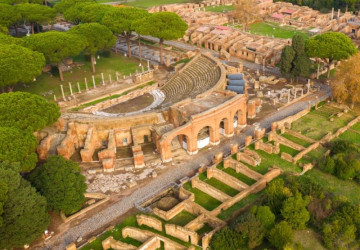
Among the most famous attractions stands the magnificent Roman Theatre of Ostia Antica.
Originally built during the reign of Augustus and later expanded, it was capable of accommodating thousands of spectators. Today, much of the original seating remains intact, making it one of the most photographed locations within the archaeological complex.
From the upper sections of the theatre, visitors can also enjoy a beautiful panoramic view of the surrounding area.
The Square of the Guilds
One of the site's most fascinating locations is undoubtedly the Square of the Guilds.
This large commercial area housed the offices of the city's major trade organizations. The surviving floor mosaics depict ships, animals, and symbols associated with commerce from different regions of the Mediterranean.
It offers a remarkable glimpse into the economic importance that Ostia once held within the Roman world.
The Baths of Neptune
The Baths of Neptune are among the most spectacular examples of Roman public architecture found within the site.
The complex is particularly famous for its stunning black-and-white mosaics depicting Neptune and various marine creatures.
These artistic details provide insight into the sophistication of Roman social spaces and the importance of leisure and public bathing in everyday life.
The Domus and Private Houses
One of the most engaging aspects of the visit is the opportunity to enter ancient Roman homes.
Many residences still preserve decorated floors, inner courtyards, and architectural features that help visitors imagine the daily routines of their former inhabitants.
The sensation is often described as walking through a city that has suddenly been emptied of its residents yet remains remarkably recognizable.
Is It Worth Visiting Ostia Antica with a Guide?
Although the site can certainly be explored independently, a guide can significantly enhance the experience.
Many buildings that initially appear to be simple ruins conceal fascinating stories and important historical functions. An expert guide can explain the purpose of different structures and provide the context necessary to fully appreciate what you are seeing.
A guided tour also offers access to historical anecdotes, lesser-known facts, and details that many visitors would otherwise overlook.
Is Ostia Antica Suitable for Families?
Absolutely.
The site's spacious layout, pedestrian-friendly pathways, and abundance of well-preserved buildings make Ostia Antica an excellent destination for families traveling with children.
The opportunity to explore a real Roman city allows younger visitors to see firsthand what they often encounter only in history books.
As a result, the experience is educational, engaging, and entertaining at the same time.
What Should You Bring for Your Visit?
To fully enjoy the experience, it is recommended to wear comfortable walking shoes, as much of the route follows ancient stone pavements and archaeological pathways.
During warmer months, bringing water, a hat, and sunscreen is highly advisable.
A camera or smartphone is also essential for capturing some of the most picturesque views throughout the archaeological park.
Why Visit Ostia Antica at Least Once?
Many visitors to Rome naturally focus on attractions such as the Colosseum, the Vatican Museums, or the Roman Forum.
Yet Ostia Antica offers something entirely different: the opportunity to observe a Roman city through the lens of everyday life.
Here, visitors encounter not only monumental structures but also taverns, shops, warehouses, private homes, and gathering places that reveal how ordinary people lived.
It is precisely this sense of authenticity that makes Ostia Antica one of Italy’s most captivating archaeological sites.
Thanks to its exceptional preservation and easy access from Rome, a visit to Ostia Antica remains one of the most rewarding excursions to include in any Roman itinerary.
Book an Ostia Antica Tour from Rome with Green Line Tours
If you would like to discover every detail of this extraordinary archaeological site without worrying about transportation logistics, the ideal solution is to book an Ostia Antica tour from Rome with Green Line Tours.
Joining a guided tour allows visitors to gain a deeper understanding of the ancient port of Rome, appreciate the significance of its monuments, and enjoy a more enriching experience than a self-guided visit. With the support of knowledgeable guides, every street, mosaic, and building reveals a story that brings the greatness of Roman civilization to life.
To turn a simple excursion into a genuine journey through history, book your Ostia Antica tour from Rome with Green Line Tours and prepare to discover one of the most fascinating archaeological treasures in the Lazio region.